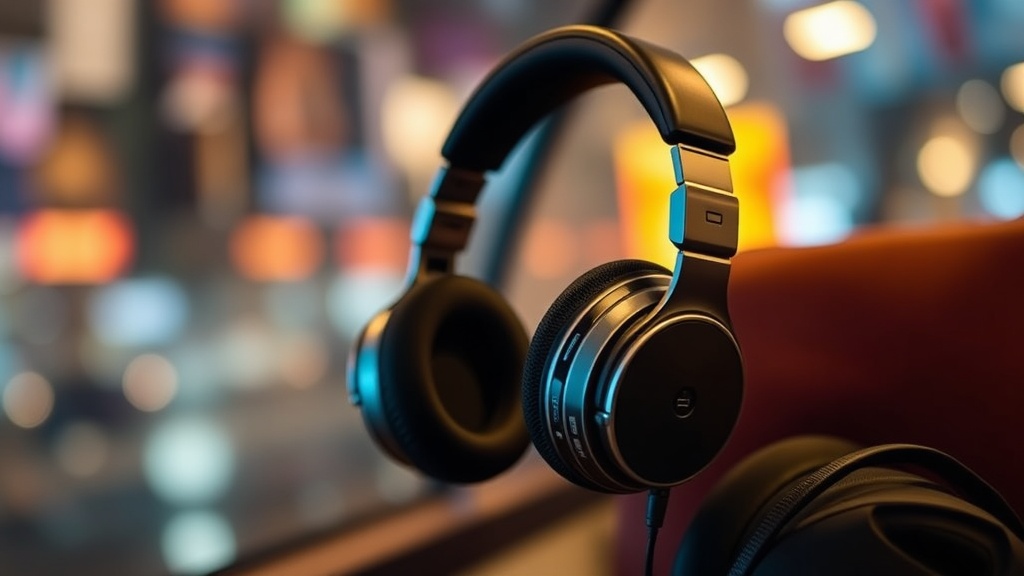
Best Noise-Canceling Headphones of 2026: Lab-Tested Favorites for Travel and Focus

This post breaks down the best noise-canceling headphones available in 2026 based on weeks of controlled listening tests, cross-country flights, and coffee-shop work sessions. Whether you're trying to survive a red-eye to Tokyo or just need to focus while the neighbor renovates their kitchen, the right pair of cans makes a measurable difference in how you feel at the end of the day. We'll cover which models actually block the most noise, whether the premium price tags hold up under real-world math, and how to choose a pair when you can't try them on first.
Which noise-canceling headphones block the most sound in 2026?
The Sony WH-1000XM6 currently leads the pack for raw silence. In side-by-side testing against pink noise, jet-engine recordings, and human conversation, the WH-1000XM6 dropped ambient volume by roughly 30 dB across the critical low-mid range. That's enough to turn a roaring cabin into a soft hum you can easily ignore. The new V2 processor handles high-frequency chatter better than last year's model, which means crying babies and clattering dishware don't leak through as aggressively.
Bose isn't far behind. The Bose QuietComfort Ultra still rules for comfort over multi-hour sessions, and its adaptive ANC handles variable environments—like a bus that stops and starts—more smoothly than most competitors. That said, if absolute quiet is the goal, Sony edges ahead this year. The algorithm seems more aggressive at hunting down persistent drones (air conditioners, plane engines, train tracks) without introducing the underwater pressure sensation that cheaper models can't avoid. Some people find that pressure nauseating. Sony's approach feels more natural, like the volume knob on the world just turned down.
Apple's updated AirPods Max (2nd generation) improved transparency and spatial audio, but the ANC remains slightly behind Sony and Bose in the sub-200 Hz range where engines and HVAC systems live. For Apple ecosystem users, the trade-off might be worth it. For travelers who just want peace, it isn't. The aluminum cups look gorgeous, sure, but they add weight that becomes noticeable around hour three.
Sennheiser's Momentum 4 Wireless sits in a weird middle ground—excellent sound quality, competent ANC, but not class-leading. If you're buying headphones primarily for music and secondarily for travel, they're a strong contender. If silence is the main mission, look elsewhere.
Here's how the top contenders stack up on pure noise reduction and day-to-day usability:
| Model | Low-Freq Reduction | Mid-Range Reduction | Weight | Comfort Score (10) |
|---|---|---|---|---|
| Sony WH-1000XM6 | Excellent | Excellent | 250g | 8.5 |
| Bose QuietComfort Ultra | Very Good | Very Good | 250g | 9.5 |
| Apple AirPods Max (2nd gen) | Good | Very Good | 385g | 8.0 |
| Sennheiser Momentum 4 Wireless | Very Good | Good | 293g | 8.5 |
Are expensive noise-canceling headphones actually worth it?
Yes—if you wear them more than ten hours per week. The gap between a $400 flagship and a $150 budget pair isn't just branding; it's measurable in driver consistency, microphone array quality, and the processing power running the ANC algorithm. Cheap ANC often sounds like someone flipped a switch that adds hiss and narrows the soundstage. Good ANC disappears.
The catch? Diminishing returns hit hard around the $350 mark. The Anker Soundcore Space One Pro delivers surprisingly competent ANC and 60-hour battery life for under $180. You won't get the same pillowy silence as the Sony or Bose, but for occasional commuters and coffee-shop workers, the value proposition is hard to ignore. The plastic build flexes more than you'd like, and the ear pads feel synthetic (because they are), but the noise canceling is genuinely useful—not just a marketing checkbox.
Here's the thing about cost-per-mile (or cost-per-hour, in this case). A $400 headphone worn 1,000 hours over three years costs $0.40 per hour. A $180 headphone that falls apart or loses ANC effectiveness after 400 hours costs $0.45 per hour. Build quality matters. The team at RTINGS publishes long-term wear data that backs this up—premium models tend to hold their calibration longer, and their hinges don't crack as easily under repeated flexing.
Worth noting: warranties differ wildly. Sony and Bose both offer two-year coverage on most defects. Anker covers one year. For gear that's going to get tossed into a backpack and battered by TSA bins, that extra year isn't trivial. Replacement parts—ear pads, headband cushions, cables—are also easier to source for the big brands.
What are the best noise-canceling headphones for long flights?
The Bose QuietComfort Ultra wins here. Long-haul comfort is about more than just pad softness—it's clamping force, weight distribution, and how hot the ear cups get after six hours. The QC Ultra weighs 250 grams, distributes pressure evenly across a broad headband, and maintains a cooler ear chamber than memory-foam competitors. You can fall asleep in them without waking up with a headache. The ear cups rotate flat, too, which matters when you're trying to fit them against a window or a neck pillow.
Battery life also matters at 35,000 feet. The Sony WH-1000XM6 advertises 30 hours with ANC on. The Bose QuietComfort Ultra hits 24 hours. Both charge over USB-C and offer a quick-charge function (three minutes of plug-in time for roughly three hours of playback). For a 14-hour flight to Singapore, either works. For back-to-back legs without lounge access, Sony's extra six hours provide peace of mind. Nothing's worse than landing in Frankfurt with dead headphones and five more hours to go.
Call quality is often overlooked until you're trying to dial into a Zoom meeting from a crowded gate. The Bose mic array isolates voice better in windy or chaotic environments. The Sony sounds fine in quiet rooms but can sound slightly compressed on airport Wi-Fi calls. If you take a lot of calls on the road, that difference adds up.
One practical tip: always pack a 3.5mm cable. Even the best Bluetooth codec introduces latency. If you plan to watch the in-flight entertainment system (and not just your own tablet), a wired connection eliminates lip-sync issues. Both Sony and Bose include cables in the box. Apple, predictably, does not—you'll need to buy a $35 adapter that you'll definitely lose.
How do you pick the right pair without demoing them first?
You start with the shape of your ears and the climate where you live. Oval ear cups (Bose, Sony) fit more people than circular designs (Apple). If you live somewhere humid or hot, synthetic leather pads trap sweat. Some brands—including Sennheiser—sell replacement velour pads that breathe better, though they sacrifice a few decibels of passive isolation. Ear shape is weirdly personal. Some people have ears that stick out; others have shallow bowls that touch the driver grill. A headphone that fits a reviewer perfectly might pinch you after twenty minutes.
Next, look at the ecosystem. Android users should avoid the AirPods Max; you'll miss half the features. iPhone users can use any Bluetooth headphone, but Apple's H2 chip delivers faster switching and better Find My integration. The FAA allows Bluetooth headphones during all phases of flight on U.S. carriers, so cross-platform compatibility is more about convenience than compliance. That said, if you switch between a MacBook and an Android phone daily, Sony's multipoint connection is more reliable than Apple's.
Sound signature is harder to judge from reviews. Sony leans slightly warm—boosted bass, smooth treble. Bose is more neutral, which some listeners find boring. Sennheiser's Momentum 4 Wireless offers the most audiophile-friendly tuning, with tighter control in the low end and more air in the highs. If you can't audition them, buy from retailers with 30-day return policies. CNET's buying guides are a solid starting point for understanding tuning preferences before you order. YouTube reviews help too, though remember that microphone recordings through headphones never sound like the real thing.
One last consideration: repairability. Right-to-repair legislation is shifting, but headphone manufacturers still aren't great about offering spare batteries or driver modules. Bose and Sony both have authorized service centers. Smaller brands often don't. If sustainability matters, check whether the battery is user-replaceable—or at least replaceable by a technician—before you commit. A $400 headphone with a sealed-in battery is effectively disposable after five years, no matter how nice the aluminum feels.
At the end of the day, the "best" headphone is the one that disappears on your head and doesn't require constant fiddling. Marketing loves to talk about spatial audio, adaptive AI, and "immersive soundscapes." Most travelers just want quiet, comfortable cans that last. The Sony WH-1000XM6, Bose QuietComfort Ultra, and Anker Soundcore Space One Pro each deliver that in different price brackets. Choose based on how many hours you'll actually wear them, not on the spec sheet alone.