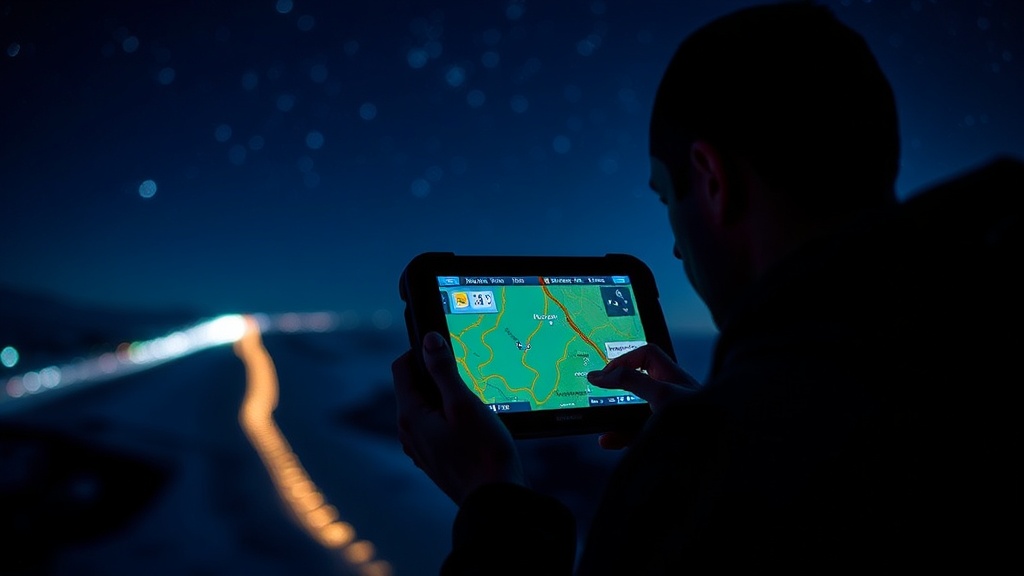
Is Your High-End GPS Handheld Actually Reliable or Just Overpriced?

The Myth of the Premium Price Tag in Navigation
Most hikers assume that if they spend $600 on a handheld GPS unit, they're buying a piece of equipment that's inherently more accurate than a $200 model or a high-end smartphone. This is a mistake. In the world of outdoor tech, price often reflects marketing budgets and fancy UI rather than raw sensor performance. A device might look sleek, but if it lacks the specialized hardware to handle multi-band GNSS, it's just a very expensive paperweight once you enter a deep canyon or a dense forest canopy.
When I was working in SAR, I saw plenty of gear fail not because it was cheap, but because it wasn't built for the specific environmental stressors of the terrain. A high-end consumer gadget might have a beautiful screen, but if it can't maintain a satellite lock when the weather turns, that screen is useless. We need to look past the box art and focus on the technical specs that actually dictate your ability to find your way home.
Does Multi-Band GNSS Actually Matter for Hikers?
You'll see the term "Multi-Band GNSS" or "Dual-Frequency" popping up in almost every high-end product description lately. It sounds like technical jargon designed to make you feel like you're missing out, but there's a real mechanical difference here. Standard GPS units often struggle with signal bounce—what engineers call "multipath error"—where a signal hits a cliff face or a tall tree before reaching your device. This causes the device to think you're several meters away from your actual position.
Multi-band technology allows the device to use two different frequencies from the same satellite. This helps the hardware differentiate between the direct signal and the reflected one. If you're navigating through a technical canyon or under a thick canopy of old-growth timber, this isn't just a luxury; it's a requirement. Without it, your track might look like a jagged, erratic line on your map instead of a smooth path. For a professional, the cost-per-mile of a device that actually works in the shade is far lower than a cheaper one that fails when you need it most.
| Feature | Standard GPS | Multi-Band GNSS |
|---|---|---|
| Signal Accuracy | 3-5 Meters | Sub-1 Meter |
| Tree Cover Performance | Moderate | High |
| Battery Efficiency | High | Variable |
| Cost-per-Mile Value | High (Short Term) | High (Long Term) |
Why Your Smartphone Isn't a Reliable Backcountry GPS
There is a persistent idea that your iPhone or Android is a perfectly capable replacement for a dedicated-purpose handheld. While mobile apps like AllTrails or Gaia GPS are phenomenal for planning and casual day hikes, they rely on the hardware inside your phone. This is where the problem starts. Smartphones are optimized for screen brightness and app responsiveness, not for long-term, low-power signal acquisition. A smartphone's battery is often drained rapidly by the constant attempt to find a signal in areas with poor cellular coverage.
Furthermore, the antennas in a smartphone are designed for a wide range of uses, whereas a dedicated handheld is built for one specific goal: staying locked onto satellites. In a survival situation, your phone is a fragile piece of glass and aluminum. A dedicated unit, however, is built to take a beating. It can handle the cold, the moisture, and the physical impact of a fall. If you're calculating the cost-per-mile, you have to account for the risk of hardware failure. A phone is a tool for convenience; a handheld is a tool for survival. For more technical insights on GPS technology, you can check out the National Geodetic Survey to see how satellite data is actually processed.
How Much Should You Pay for Reliable Navigation?
If you're looking at the price tags, don't just look at the total. Break it down. A $500 device that lasts five years of weekend excursions is much more economical than a $150 device that fails you during your first heavy storm. When evaluating a purchase, look at the following technical metrics:
- Battery Type: Is it internal (non-replaceable) or does it take standard AA/AAA batteries? In the field, being able to swap batteries is a huge advantage.
- Display Type: Is it a sunlight-readable MIP (Memory-in-Pixel) display or a bright LCD? MIP displays are much easier to read in direct sun and consume significantly less power.
- Satellite Support: Does it support GLONASS, Galileo, or BeiDou in addition to GPS? More systems mean more reliability.
I've seen people spend a fortune on devices that have features they'll never use, like high-resolution color maps that drain the battery in three hours. If you're out in the backcountry, you don't need a high-def screen; you need a clear, readable interface that can withstand a 10-hour hike without dying. The goal isn't to have the most advanced gadget in your pack—it's to have the one that won't leave you lost when the sun goes down.
The Hidden Cost of Low-End Navigation Gear
The most expensive piece of gear is the one that doesn't work when you're in a crisis. When you buy a low-end GPS unit, you're often paying a hidden tax in the form of unreliable data. If your device reports you are 20 feet to the left of where you actually are, that might not matter on a flat meadow. But if you're navigating a narrow ridge or a tight canyon, that 20-foot error is the difference between staying on the trail and walking off a ledge.
This is why I always tell people to look at the technical documentation rather than the marketing-friendly "easy to use" claims. A device that is "simple" might actually be "limited." A device that requires a bit of setup or has a steeper learning curve might actually offer the precision you need when the environment gets hostile. Don't settle for a device that makes navigation look easy; choose one that makes navigation certain. Whether you're a professional or a weekend warrior, your gear should be an extension of your competence, not a bottleneck to it.