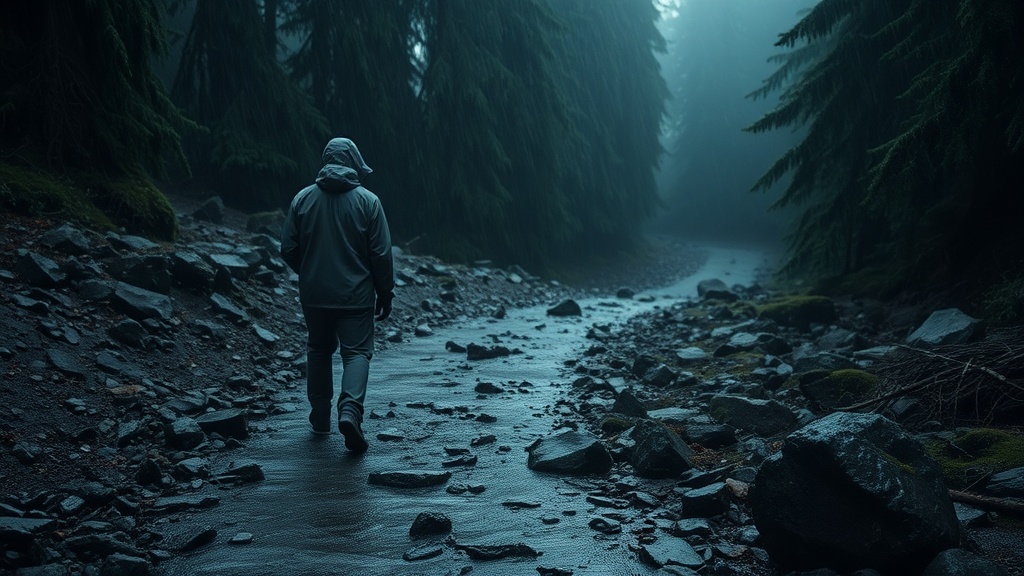
The Day Hike Lie: 6 Gear Items That Actually Survive Cascadian Rain

Let's look under the hood of what actually keeps people safe. Spring is here, which means outdoor gear sales are spiking and "best day hike essentials" listicles are multiplying like slime mold on a wet stump. I've read dozens of them. They're almost uniformly useless. The people writing them hiked the Enchantments once in July, took some photos, and now they're telling you what to buy. (If you're looking to cut through the noise, I've written about how to filter gear lists by failure-test data instead of marketing claims.) I spent years on a Search and Rescue team in the Cascades. I've watched people get evacuated from trails they'd done a hundred times because one piece of gear—a jacket, a boot sole, a soaked map—failed them at exactly the wrong moment. I now spend most of my time testing gear in the conditions manufacturers would rather you never put it through. This list isn't aspirational. It's survival-tested. Here's what actually works in PNW conditions. --- ## First: Why Manufacturer Specs Are Fantasy Numbers Before we get to the gear, you need to understand how gear companies test their products—because it will make everything else make sense. This pattern shows up everywhere in outdoor gear: sleeping bag temperature ratings are lab fantasies, breathability numbers don't translate to the trail, and durability specs assume pristine handling. Same playbook, different product. DWR (Durable Water Repellent) coatings get tested in a lab. Controlled temperature, controlled water pressure, no body heat, no exertion sweat pushing vapor outward, no sustained contact with wet vegetation. Under those conditions, $250 shells look impressive. Under three hours of Cascadian shoulder-season rain at 45°F—where you're generating significant heat while climbing, air humidity is sitting at 85–90%, and your jacket is constantly brushing against wet brush—you start to see what "waterproof" actually means. Breathability ratings (RET, MVTR) are similarly lab-derived. A 20,000 g/m²/24h breathability rating sounds meaningful until you understand it's measured at a fixed temperature differential that doesn't exist on a wet ridgeline in March. Sole grip data is usually measured on dry surfaces. Boot heel geometry for wet granite requires specific lug depth and compound softness that you won't find in most spec sheets. I'm not saying manufacturers are lying. I'm saying their testing conditions and your conditions have almost nothing in common. --- ## The 6 Items That Actually Matter ### 1. Rain Shell — Seam Tape and Pit Zip, or Don't Bother The rain jacket is where most people's budgets go and where most failures happen. Here's what actually matters: Fully taped seams. Not "critically taped" (hood, shoulders)—fully taped. Water infiltrates through seams before it infiltrates through the face fabric on any quality jacket. In the Cascades, "critically taped" is a spring hike failure waiting to happen. This is non-negotiable. Pit zips. Underarm ventilation is your breathability in the field when your jacket's membrane is overwhelmed by exertion moisture. A jacket without pit zips will have you soaking yourself from the inside out within 90 minutes of sustained climbing. You'll feel "waterproof" but you'll be wet. This is probably the most common comfort failure I see in the field. Hood geometry that moves with your head. This sounds minor until you're navigating a sketchy ridgeline in heavy rain and your hood is rotating with your jacket, not your head, and you can't see properly. Look for a hood with a separate adjustment system and some structure in the peak. DWR will wet out. Plan for it. Wash and reactivate with low heat (20 minutes in a dryer after washing) every 5–10 uses, or you're essentially hiking in a wet plastic bag by hour three. (I've written in detail about how to maintain DWR without destroying it in your laundry—it's worth the 10 minutes.) I carry a shell in the 400–500g range for day hikes. Lighter than that and you're usually sacrificing seam tape coverage or fabric durability. ### 2. Boots — Sole Compound Matters More Than Brand 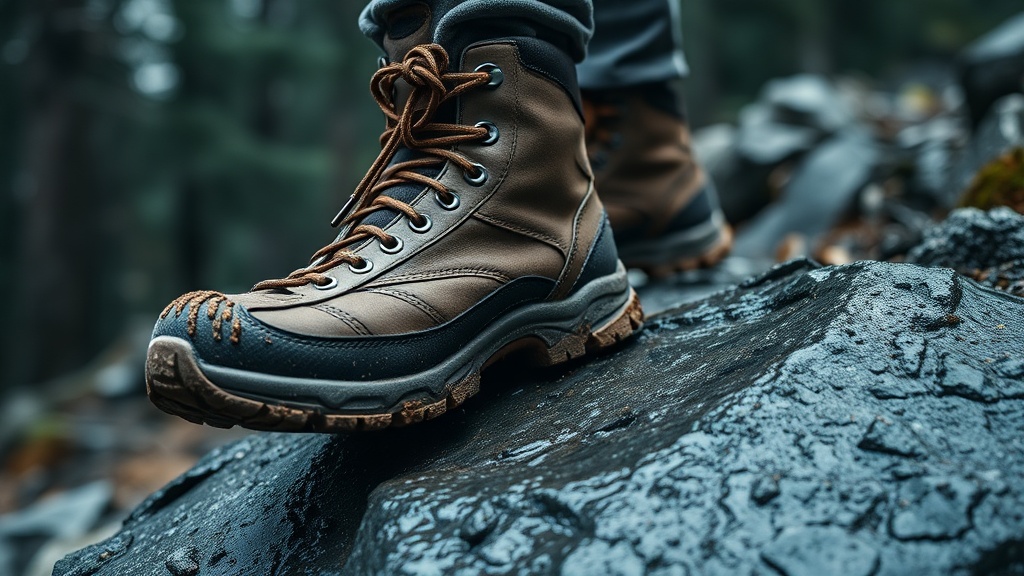 Wet granite is a specific problem. Most boot discussions focus on ankle support (useful) and waterproof liners (complicated) without addressing the thing that actually stops you from sliding off a trail in March: sole compound. Vibram Megagrip is the current gold standard for wet surface grip. The compound maintains tack in cold, wet conditions and on wet rock surfaces where standard Vibram Montagna or generic rubber compounds start to skate as temperatures drop toward and below freezing. The difference on a wet granitic slab is not subtle—it's the difference between confident footwork and skating. (One note: don't store your boots in a damp garage. Sole hydrolysis happens during storage and storage failure is more common than people think—you might not discover the problem until you're on the trail.) Lug depth matters for mud, less so for rock. For PNW trails, you want moderate lugs (4–5mm) with reasonable spacing so mud sheds rather than packing. Deep aggressive lugs are overkill and add weight without grip benefit on rock sections. On waterproof liners: Gore-Tex and similar do extend waterproofing in shallow crossings and persistent rain. They also reduce breathability, which means your feet will be wet from sweat on longer approaches. For day hikes under 8 miles with creek crossings, I use a waterproofed boot. For longer approaches with significant elevation, sometimes I'd rather have a non-waterproof boot that breathes and just accept wet feet over wet-from-sweat feet. Context matters. ### 3. Pack — Emergency Capacity, Not Instagram Volume This is where I'll be heretical: stop optimizing your pack for ultralight aesthetics and start optimizing it for emergency capacity. For a Cascadian day hike, I want 25–30L minimum. Not because I carry that much gear on a normal day—I don't. I want that volume because conditions change, people in my group can bonk unexpectedly, and I should be able to carry a second layer, emergency bivy, and first aid kit without being forced to strip those items out to make room. What I don't want: a frameless ultralight sack with no hip transfer for a 6-hour day hike. The weight savings on a frameless pack versus a simple internal frame pack is typically 200–400g. At the end of a long day with a 20-pound load, that difference is not why people fail. Cold exhaustion from being underprepared is why people fail. Waterproofing: I use a dry bag liner inside my pack rather than relying on the pack's water resistance. Pack seams fail. Zippers fail. Backpanel padding wicks water in like a sponge. A 10L dry bag liner that keeps your electronics, extra layer, and emergency gear bone-dry costs around $15 and weighs 70g. It's the highest value-to-weight upgrade you can make. ### 4. Water Treatment — Because PNW Water Is Not Clean The Cascades look clean. The water is not clean. Giardia, Cryptosporidium, and (increasingly) Cyclospora are present in backcountry water sources throughout the range. Day hikers systematically underestimate this because the water is clear and cold and the trail looks remote. Neither of those things is relevant to protozoan contamination. The Sawyer Squeeze is my field recommendation—not because it's the only option, but because it handles drops, rough handling, and sustained field use without complaint. At 85g, it's lighter than most alternatives. Flow rate drops as it clogs; backflush it regularly. Critical freeze warning—read this before you pack your filter: Hollow-fiber filters like the Sawyer use membranes that can crack when frozen. A cracked filter passes contaminated water while appearing to function normally. You will not know it's compromised until something unpleasant happens downstream. In cold conditions, keep your filter in an insulated pocket or against your body. If your filter has been left to freeze overnight in your pack, replace it before the next use. This is a hard line—not a conservative suggestion. Chemical treatment (Aquatabs, iodine) works but is slower and has taste issues. UV treatment (Steripen) works but requires batteries, which fail in the cold. For a day hike where you have one primary system, I want the mechanical filter because it doesn't require power and doesn't require waiting—as long as it hasn't been frozen. Carry at least 2L water capacity. That means 2L in your bladder or bottles plus your filter. Cascadian spring conditions mean sweating more than you think in cool temps—your sense of thirst is a lag indicator. ### 5. Insulating Layer — Wet Warmth, Not Dry Warmth Down is not your friend in Cascadian rain conditions. I don't care what loft rating it has. I don't care if it's 850-fill ethically sourced from Norwegian geese. Wet down collapses dramatically—the wetter it gets, the more loft it loses, and soaked down is close to useless as insulation. In persistent Cascadian rain, it will get wet eventually, regardless of your shell. Synthetic insulation (Primaloft, Coreloft, Polartec Thermal Pro fleece) retains meaningful warmth when wet—fleece in particular holds much of its loft and dries faster than synthetic fill jackets. For day hikes, my Layer 2 is a mid-weight fleece (Polartec 200 or equivalent, ~350g) or a synthetic insulated jacket (50–80g insulation weight). Not a down puffer. The weight difference between comparable-warmth synthetic and down is now around 50–100g—not enough to matter on a day hike, absolutely enough to matter when you're standing wet in 40°F wind. This is the layer where I see SAR situations develop. Someone gets wet, stops moving, pulls out their down jacket they've been careful to keep "dry" inside their pack—and the jacket's ineffective because it absorbed ambient moisture during a 6-hour rain day. Synthetic. Every time. ### 6. Navigation — When Your Phone Is Dead and Your Map Is Pulp "Bring a map" is standard advice. What doesn't get said: waterproof your map, know how to use a compass, and understand your phone's cold-weather behavior before you depend on it. Lithium-ion batteries lose capacity significantly in cold conditions. A phone that looks fine in your warm pocket can plummet once cold air hits it directly. If your navigation plan is "my phone has AllTrails on it," your navigation plan has a single point of failure with a well-documented cold-temperature failure mode. Test it at home in cold conditions before you trust it on a ridgeline. I carry a baseplate compass and a printed topo of the area laminated or in a map case. Something in the 40–50g range works fine—the Suunto A-10 is a solid budget option (check current retail, typically under $30). The compass is specifically for the "I need to take a bearing and walk out of here" scenario, which is rare—but the scenarios where it's needed tend to be exactly the scenarios where everything else has already gone wrong. Paper maps: USGS 7.5-minute topos are free to download and print. A piece of flat laminate from a print shop costs a few dollars. Total navigation backup system with compass: well under $50, under 100g. The math on this is easy. --- ## The Weight Penalty Myth The ultralight hiking community has done a lot of good work and some genuine harm. The good: aggressive weight auditing of redundant gear, better pack designs, lighter footwear for appropriate conditions. The harm: a culture where shaving 30g from a jacket is discussed with the same gravity as shaving it from a shelter system on a multi-week route. On a Cascadian day hike, the relevant failure mode is not "I bonked because my pack was too heavy." The relevant failure mode is hypothermia-assisted exhaustion from being wet and cold for four hours with inadequate insulation. Cold exhaustion impairs decision-making first, which means the person making bad decisions on the trail is often the last to know they're in trouble. Your Layer 2 insulation should not weigh 90g. Your pack should not be so minimalist that you can't carry emergency supplies. Your boots should not be trail runners in March on wet granite above 3,000 feet. On a day hike, the meaningful weight threshold is roughly 25–30 pounds for a full-safety kit. Under that, you're optimizing for comfort. Above that for a day hike, you've over-packed. Between 20–25 pounds, you're in the safety margin with room to move. --- ## What to Leave in the Car Trekking poles for most day hikes: the cases where they add meaningful value (significant elevation loss on loose terrain, river crossings) are real but specific. For a PNW forest trail to a peak, they're mostly something to stow when the terrain gets technical and you need your hands. If you're doing significant loose scree descent or have knee issues, keep them. Otherwise, that's 400g you could have left behind. Action camera rigs and mirrorless camera setups: I've seen people carrying 2kg of camera gear on a day hike where they're already under-layered for the conditions. Your phone camera is good. Save the tripod for conditions where you're not fighting a margin. Rope on a non-technical trail: carries a psychological safety premium it doesn't deliver. If you're on terrain where you think you might need a rope, you need a rope course, not a rope. Gadgets that require batteries (personal locators excepted—carry one, always): electronics fail in cold and wet. Every battery-dependent item is a potential failure point on a day where you most need it. --- ## The Bottom Line Spring in the Cascades means weather that changes faster than the forecast updates, trails that were clear at 10 AM and socked in by 2 PM, and gear that was purchased based on a spec sheet and tested in conditions that don't exist at 47°N under a marine layer. None of this is meant to scare you off the trail. The Cascades in spring are extraordinary. The trails are emptier than summer, the wildflower timing is starting in the lower elevations, and the snowline is sitting at 3,000–4,500 feet depending on the week—which means there's a full range of accessible terrain. Just go prepared for the conditions that actually exist. Not the conditions in the marketing photos. Not the conditions where your jacket was tested. The cold, wet, 85%-humidity, 40°F-wind reality of a PNW spring afternoon. The SAR calls I remember most clearly aren't from catastrophic equipment failures. They're from slow failures—a jacket that was fine until it wasn't, a phone that died just before the critical turn, a layer that wasn't warm enough once the exertion stopped. Each one preventable with gear that costs roughly the same as the gear that failed. Before you head out, do a quick 15-minute audit of your kit against known recalls and failure modes—it's the cheapest insurance you have. Don't get rescued because your jacket lied. The specs on the tag are a starting point, not a promise. Happy hiking, but watch your gear.