The Headlamp in Your Go-Bag Is Probably Dead

The Headlamp in Your Go-Bag Is Probably Dead
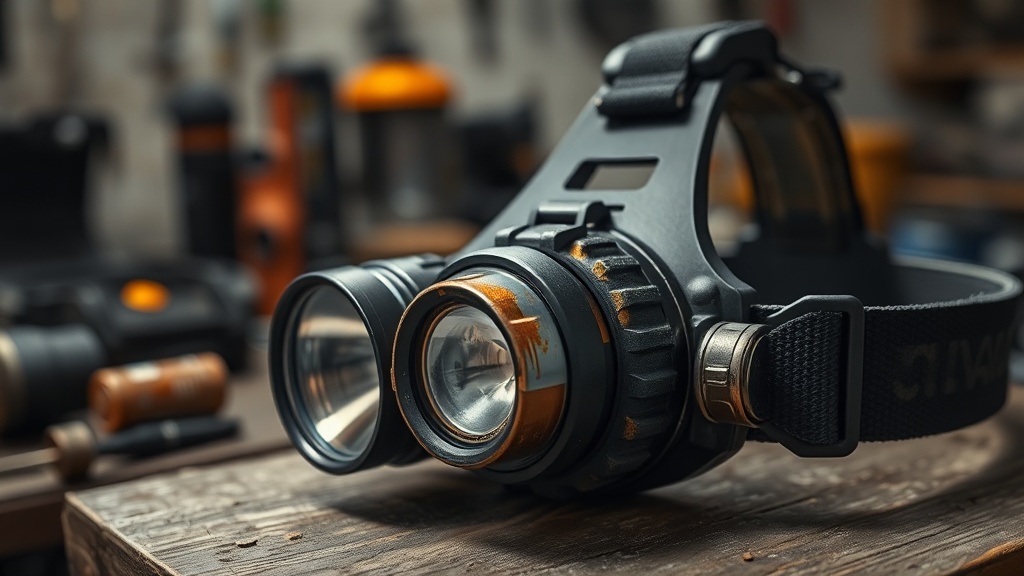
I pulled four headlamps out of my truck's emergency kit last week. Two were dead. One had alkaline battery paste crusted across its terminals like geological strata. The other powered on for about twelve seconds, then flickered out — classic LED driver moisture damage from a cracked lens gasket I should have caught months ago.
These weren't junk brands. One was a Petzl Actik Core. The other was a Black Diamond Spot 400. Both cost north of $40. Both failed the most basic test: will this thing work when I grab it in the dark?
I've been carrying headlamps in the Cascades for over fifteen years and assisting SAR operations for a chunk of that time. The pattern is consistent. The headlamp that fails isn't the one you use every weekend — it's the one sitting in the bottom of your pack, your glovebox, or your emergency cache. The one you assume works because it worked last time you checked, which was... when, exactly?
Failure Mode #1: The Alkaline Time Bomb
Alkaline batteries leak. This isn't a defect. It's a chemical inevitability. Potassium hydroxide is a corrosive electrolyte, and when the battery's zinc casing degrades — accelerated by temperature swings — that electrolyte seeps out and eats your contacts alive.
I weigh every piece of kit I carry. I also track every failure in my Death Log. In the last four years, alkaline battery leakage accounts for more headlamp kills than every other failure mode combined. It's not close. Rough count: eleven alkaline leak failures versus three from all other causes.
The fix is simple but annoying: stop storing alkaline batteries inside your headlamps. Period. If you're running AAA headlamps, pull the batteries out after every trip and store them separately. Or — and this is what I actually recommend — switch to lithium primaries (Energizer L92s). They don't leak. They handle temperature extremes better. They weigh less. They cost about twice as much per cell, but when you factor in the headlamps you won't destroy, the math breaks your way fast.
Cost-per-mile on a set of lithium AAAs in a Petzl Actik over a full season of weekend use: roughly $0.008/mile. Alkalines that leak and kill the lamp: effectively infinite cost-per-mile because the lamp goes to zero.
Failure Mode #2: Water Ingress Through the Battery Compartment
IPX ratings are lab numbers. IPX4 means the lamp survived a controlled spray test in a climate-controlled facility. It does not mean your headlamp will survive eight hours of Cascadian sideways rain while strapped to a wet beanie on your forehead, body heat creating a micro-humidity environment inside the housing.
I've cracked open three headlamps post-failure and found condensation on the circuit board with no visible external damage. The gaskets looked fine. The O-rings were seated. But moisture got in anyway — likely through the battery compartment door, which on most headlamps is the weakest seal point because it's designed to be opened frequently.
My field protocol: after any extended rain exposure, I pop the battery door, pull the cells, and leave it open overnight in a dry environment. Takes ten seconds. Prevents the kind of slow internal corrosion that kills a lamp three months later when you need it on a dark approach.
Failure Mode #3: The USB-C Rechargeable Trap
Rechargeable headlamps are better for the environment and cheaper per lumen-hour over time. I'm not arguing against them. But they introduce a failure mode that AAA lamps don't have: you can't swap cells in the field.
When a rechargeable headlamp dies at 11 PM on a November bivy, your options are: (a) carry a power bank and a cable, or (b) navigate by feel. Option A adds weight and complexity. Option B is how people get hurt.
The headlamps I trust most are hybrid designs — rechargeable core battery with AAA backup compatibility. The Petzl Actik Core does this. The Black Diamond Spot series does this. If your rechargeable headlamp doesn't accept standard cells as backup, that's a design limitation you need to account for in your planning.
One more thing about rechargeables: lithium-ion cells degrade with age regardless of use. A rechargeable headlamp that's been sitting in your closet for two years has lost meaningful capacity even if you've never turned it on. The chemistry doesn't care about your intentions. Cycle it monthly or accept the degradation.
Failure Mode #4: The Headband Nobody Checks
This one is mundane but I've seen it cause real problems. Elastic headbands lose tension over time, especially with UV exposure and sweat salt accumulation. The lamp slips. You tighten it. It slips again. Eventually it drops — off a ledge, into a creek, into deep snow.
I replace headbands annually. Most manufacturers sell them separately for a few dollars. If yours doesn't, that tells you something about their commitment to long-term serviceability.
While you're at it, check the tilt mechanism. The ratcheting pivot on many headlamps (Petzl's is particularly prone to this) gets gritty with trail dust and eventually either locks in place or loses its detent entirely. A drop of silicone lubricant on the pivot annually keeps it functional. Don't use WD-40 — it'll degrade the plastic housing.
My Current Rotation and the Numbers
Primary (on my head most trips): Petzl Actik Core. 450 lumens max, but I run it at 100 most of the time because max output is a marketing number that drains the cell in under two hours. Real-world runtime at useful output: roughly 8 hours on the core battery. Weight with core battery: 82g on my scale (Petzl claims 82g, which is one of the few times a manufacturer hasn't lied to me about weight). Rechargeable with AAA fallback. This is the one I reach for.
Backup (lives in my pack lid): Nitecore NU25 UL. 46g. USB-C rechargeable only — no AAA backup, which I accept because this is a backup to my backup and I'm already carrying a power bank. 400 lumens max but the real value is the red and high-CRI auxiliary LEDs.
Emergency cache (truck kit): Princeton Tec Snap Solo. Runs on a single AAA. 28g. 70 lumens. Not glamorous. Not bright. But it's mechanically simple, virtually indestructible, and I keep it stored with a lithium primary removed and taped to the body. It will work in two years when I grab it. That's the only metric that matters for an emergency light.
The 90-Second Quarterly Headlamp Audit
Every three months, I run through this checklist. Takes about 90 seconds per lamp:
- Power on. Does it light up immediately? Any flicker? Dimmer than you remember?
- Mode cycle. Run through every mode. If any mode fails, the driver board may be going.
- Battery check. Pull the cells. Look for any white or blue-green residue. If alkaline, replace. If rechargeable, charge to full and note the time — if it charges in half the expected time, the cell is degraded.
- Seal inspection. Check the battery door gasket and lens seal. Press the lens gently — any flex suggests gasket compression set.
- Band tension. Stretch the headband. If it doesn't snap back firmly, replace it.
- Pivot test. Tilt the head through its full range. Should click positively at each detent.
Six checks. Ninety seconds. This is how you avoid standing in the dark wondering why your $50 headlamp chose tonight to die.
Your headlamp is the cheapest piece of safety equipment you carry and probably the one you think about least. That's exactly why it fails. It's not the gear that breaks under load that gets people in trouble — it's the gear that was already broken before they left the trailhead.
Stop assuming. Start checking. And for the love of everything, get those alkaline batteries out of your stored lamps.