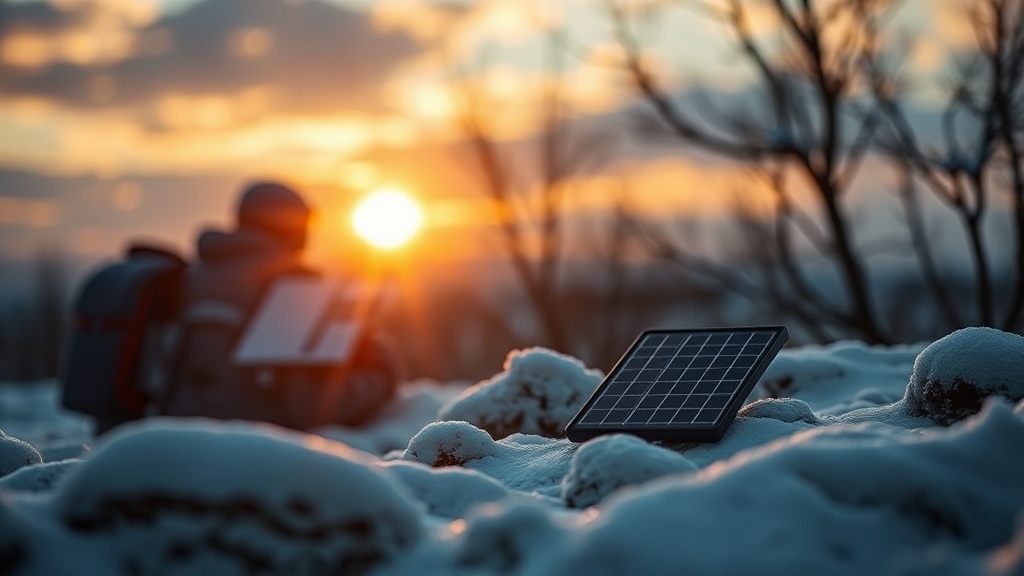
Keeping Your Solar Power Bank Efficient in Low Light

Quick Tip
Angle your solar panel directly toward the brightest part of the sky, even if the sun is obscured by clouds, to maximize photon absorption.
A single cloud drifting across the sun can drop your solar panel's output by more than half in seconds. Most hikers realize too late that their "high-efficiency" panel is barely trickling a charge into their power bank when the weather turns gray. This post breaks down how to maintain a steady charge when the light isn't perfect.
How Do I Get More Power from Solar in Cloudy Weather?
You can maximize output in low light by ensuring the panel is at a direct, perpendicular angle to the brightest part of the sky. Even if the sun isn't visible, the most intense light often comes from a specific patch of bright sky rather than the general gray haze. If you're using a portable panel like the Goal Zero Nomad series, don't just lay it flat on your pack; angle it toward the brightest point of the horizon.
Temperature also plays a massive role here. While solar cells love heat, extreme heat actually lowers their efficiency. A cooler, bright day is often better for your gear than a sweltering, humid afternoon. If you're out in the backcountry, keep the panel in the shade of a tree or a rock while the actual device stays in the sun—though most consumer-grade solar banks aren't designed for that kind of split. It's better to keep the panel clean of dust and debris to ensure every photon counts.
Which Solar Panel Angles Work Best?
The best angle is always the one that minimizes the cosine loss—the reduction in light intensity when light hits a surface at an angle. To keep your power bank from stalling, follow these positioning steps:
- Find the Brightest Spot: Look for the brightest patch of sky, even if it's behind clouds.
- Adjust Every 30 Minutes: The sun's position shifts, and so does the optimal angle for your panel.
- Clear the Surface: A thin layer of dust or bird droppings can tank your efficiency.
If you're tracking your gear's performance closely, you might also want to look into configuring your satellite messenger to ensure your communication stays up while your power is low. It's a smart way to manage your total energy budget in the field.
Does Panel Color Affect Charging Speed?
Color matters because darker, monocrystalline silicon cells generally offer higher efficiency than polycrystalline ones. If you're looking at technical specs on Wikipedia's entry on the photovoltaic effect, you'll see that the material's ability to convert light into electricity is a physics-based reality, not a marketing trick. A high-quality, dark-colored panel will always outperform a cheaper, lighter-colored alternative in low-light scenarios.
| Panel Type | Low Light Performance | Typical Use Case |
|---|---|---|
| Monocrystalline | High | Serious backpacking/Long-term |
| Polycrystalline | Moderate | Light hiking/Budget setups |
| Thin-Film | Variable | Lightweight/Emergency backup |
Don't rely solely on a small panel for a heavy-duty setup. A 10W panel won't keep up with a modern smartphone and a drone, no matter how much you angle it. Plan your wattage based on your total device consumption.